
Cloud Gaming in 2026: Has the Latency Problem Finally Been Solved?
I remember the first time I tried cloud gaming. It was 2019, Google Stadia had just launched, and I sat in my living room with a founder's edition con
I remember the first time I tried cloud gaming. It was 2019, Google Stadia had just launched, and I sat in my living room with a founder's edition controller, genuinely excited about the future. The pitch was irresistible. No console. No downloads. No patches. Just press a button and play. I booted up Destiny 2, aimed at a Fallen Captain, and pulled the trigger. The shot registered about a half-second after I expected it to. I died. I turned it off and went back to my PlayStation.
Seven years later, I'm sitting in the same room, playing Cyberpunk 2077 at 4K with full ray tracing on a laptop that would burst into flames if it tried to run the game locally. The latency is essentially imperceptible. The image quality is indistinguishable from native. And I'm starting to think the thing everyone said was five years away for the last ten years has actually, quietly, finally arrived.
The Numbers That Matter
Let's talk about what "solved" actually means, because it's not a binary. Latency is the total delay between pressing a button and seeing the result on screen. In a local game running on a console connected to a TV, that's typically between 30 and 80 milliseconds, depending on your display. Anything under 100ms feels responsive to most people. Competitive fighting game players will tell you they can feel the difference at 30ms, and they're probably right, but for the vast majority of games and the vast majority of players, the target is just staying under triple digits.
When Stadia launched, round-trip latency for most users was between 120 and 180 milliseconds. That's the gap between a game feeling responsive and a game feeling like you're wading through molasses. It was close enough to working that you could see the potential, and far enough from working that you couldn't ignore it.
In 2026, the major services — GeForce Now, Xbox Cloud Gaming, Amazon Luna, and the new PlayStation cloud tier — are all routinely delivering sub-40ms latency for users within reasonable distance of a data centre. That's in the same ballpark as a local console on a good TV. The gap has closed.
How We Got Here
Three things had to happen, and they've all happened in the last two years.
The first is edge computing. In 2019, the big cloud providers had data centres in major cities, but not nearly enough of them. If you lived in a mid-sized city two hundred miles from the nearest server, your packets had a long round trip ahead of them. Today, Amazon, Microsoft, Google, and Nvidia have collectively deployed edge nodes in hundreds of additional locations. Nvidia's partnership with telecom providers puts GeForce Now hardware directly inside ISP data centres, cutting the physical distance between the player and the server to single-digit miles. Light travels fast, but distance still matters when you're measuring in milliseconds, and cutting that distance has been the single biggest win.
The second is improvements to video encoding. Cloud gaming is really a video streaming problem. The server renders the frame, encodes it as video, sends it to your device, and your device decodes and displays it. Every step in that pipeline adds latency. In 2019, encoding a 4K frame added roughly 10-15ms. With newer codecs and dedicated encoding hardware on the server GPUs, that's down to 2-4ms. They've shaved an entire frame of latency just through better compression.
The third is the part that gets talked about less: the client devices have gotten better. Modern phones, tablets, and TVs have dedicated decoding hardware that can chew through a video stream in under a millisecond. Wi-Fi 7 routers are now common enough that home network latency, the wildcard that used to ruin cloud gaming even when the server was close, has become far more predictable. A wired connection is still ideal, but good Wi-Fi isn't the dealbreaker it used to be.
The Experience Today
So what does this actually feel like? I spent a month using GeForce Now Ultimate as my primary gaming platform. That tier gives you a server instance with an RTX 5080 equivalent, streaming at up to 4K 240fps with full ray tracing. I played through Alan Wake 2, a game that my own PC absolutely cannot handle at anything above medium settings. I finished it at max settings, 4K, with path tracing on. It looked incredible. More importantly, it felt like I was playing locally.
Was it literally identical? No. I could detect a tiny difference in fast first-person camera movement if I was actively looking for it. But within five minutes of starting a session, I stopped noticing entirely. My brain adjusted, same as it adjusts to a different TV or a different controller. The latency was below the threshold where it interferes with the experience for anything outside of competitive shooters.
That last qualifier matters. I would not play Counter-Strike 2 on a cloud service. I would not play Street Fighter 6 ranked matches. The latency is low enough for single-player and casual multiplayer, but the kind of people who count frames and measure input lag in single-digit milliseconds will never be satisfied with a round trip to a server, no matter how short. Cloud gaming isn't for them, and it doesn't need to be.
The Price Equation That Changed
The thing that really shifted the conversation isn't just the technology. It's the economics. A GeForce Now Ultimate subscription costs $20 a month. An RTX 5080 costs somewhere north of $1,200 at retail, if you can find one. That's five years of streaming before you break even on the GPU alone, never mind the rest of the PC. For people who want to play the latest games at high settings but don't want to sell a kidney to do it, the math has become hard to argue with.
Microsoft and Sony have noticed this too. Sony's expanded PlayStation cloud tier, launched in early 2026, streams PS5 games at up to 4K and includes a growing library of titles in the subscription. Microsoft's Xbox Cloud Gaming is now baked into Game Pass Ultimate and works well enough that I've seen people complete entire RPGs on their phones during commutes.
The hardware companies aren't stupid. They see the trend line. Nvidia's gaming revenue increasingly comes from data centre GPUs rented out through GeForce Now rather than retail cards sold to consumers. The business model is shifting from selling hardware to selling access to hardware. The hardware itself becomes someone else's problem.
What Still Doesn't Work
I don't want to oversell this. Cloud gaming in 2026 is good, genuinely good, but it's not magic. There are real remaining problems.
The first is availability. If you live in a major North American, European, or East Asian city, you're probably within range of a good experience. If you live somewhere without nearby data centre coverage — and that's most of the world's land mass — the latency math still doesn't close. Rural areas, developing countries, anywhere with weaker internet infrastructure, cloud gaming ranges from mediocre to completely unusable. This is an equity problem that better encoding can't solve. It needs physical infrastructure, and that's expensive and slow.
The second is data caps. Many ISPs still impose monthly bandwidth limits, and cloud gaming absolutely demolishes them. A 4K stream burns through about 20GB per hour. Play two hours a day and you're looking at well over a terabyte a month. If your ISP caps you at 1.2TB, cloud gaming is competing with every other thing your household does online. Until data caps go away or become much more generous, this is a real ceiling on adoption.
The third is ownership. This is the philosophical one. When you buy a game on Steam, you have it — sort of, in a way that's mediated by Steam's DRM but still feels like ownership. When you stream a game, you own nothing. The game lives on someone else's computer. If the service shuts down, or the licensing deal expires, or the publisher pulls their catalogue, your access disappears. We've seen this movie before with Stadia. Google refunded the purchases, but people lost their saves, their progress, their investment.
The Shape of the Future
All that said, I think we've crossed a threshold. Cloud gaming is no longer a tech demo or a promise about tomorrow. It's a viable way to play games today, right now, with a quality level that most people will find indistinguishable from local hardware. The technology has caught up to the pitch.
What that means for the industry is the interesting question. If cloud gaming continues to improve and spread, the console generation model starts to look creaky. Why buy a box that sits under your TV when the games can come to whatever screen you already own? Sony and Microsoft seem to be hedging their bets. They're still making consoles, but they're also investing heavily in streaming infrastructure. They see the same trend line Nvidia does.
For players, the upside is access. A good gaming experience on any screen, any device, anywhere with a decent internet connection. For the industry, the upside is reach. Billions of people have phones. Only hundreds of millions have consoles or gaming PCs. Streaming is the bridge between those numbers.
The downside, if there is one, is concentration. When the games run on servers owned by a few giant companies, those companies have enormous leverage over what gets played and how. We've seen this pattern in every other medium that moved to streaming. Music, film, television. The platform owners become the gatekeepers. Whether that's good for games, good for developers, or good for players is a question the next decade is going to answer whether we like it or not.
But in the meantime, I can play Cyberpunk 2077 with path tracing on a MacBook Air. In 2019 that was a punchline. In 2026 it's a Tuesday evening. That counts for something.
Original Content Declaration — This article was written by the appdgg Editorial Team and represents original work created through independent research and firsthand gameplay experience. Last updated: July 2026.
Other content
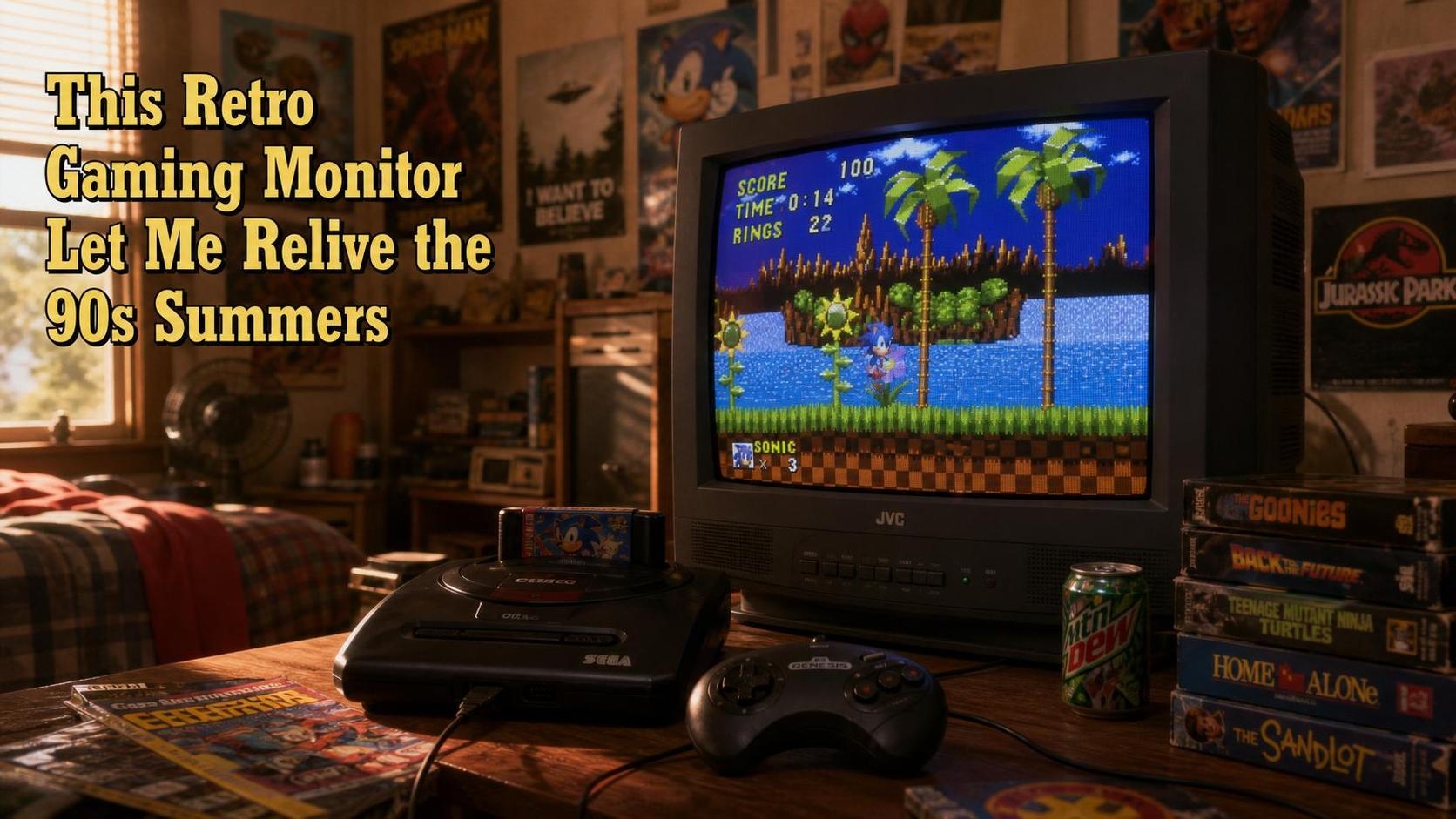
This Retro Gaming Monitor Let Me Relive the 90s Summers
There is a specific smell that belongs to a summer afternoon in the 1990s. It's a mix of hot asphalt, grass someone just mowed, and the warm electrica
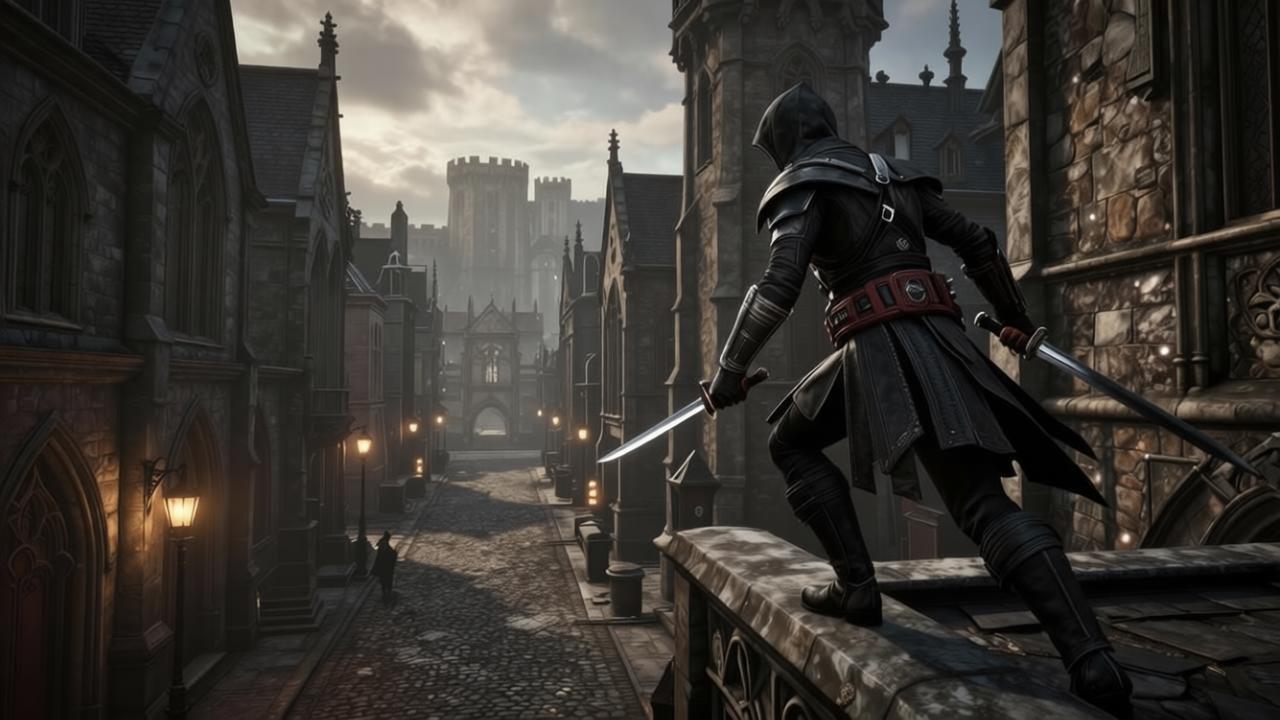
Assassin's Creed Shadows Ended Up Great–If You Played All The DLC
I'll say something that might get me looked at sideways by certain corners of the fanbase. I think Assassin's Creed Shadows is genuinely good. Maybe e
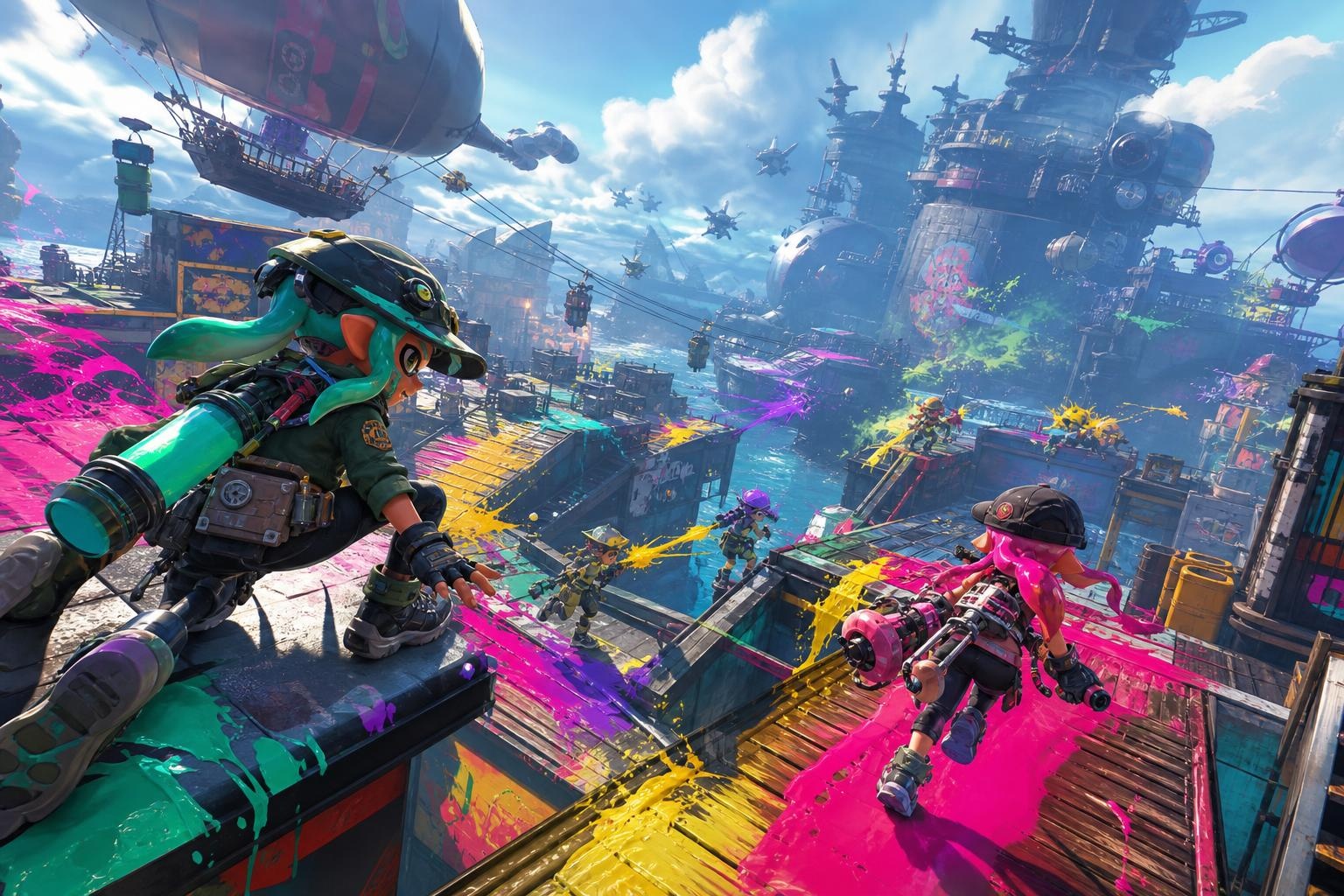
Splatoon Raiders Is A Bold Rethink Of What Makes A Splatoon Game
Splatoon Raiders Flips the Series on Its Head, and That's Exactly the Point For close to ten years, Splatoon has meant one thing to most players. Comp
Prime Slimes: A Guide To Gaming's Greatest Goo-Getters
Prime Slimes: A Guide to Gaming's Greatest Goo-Getters There is something weirdly satisfying about a good slime. Maybe it's the way they jiggle when t