
I Walked Into a Mirror at Full Speed When I Was Ten Years Old and I Have Been Chasing That Feeling Ever Since
I was ten years old and I broke my nose on a mirror that I was absolutely certain was a hallway. Let me back up. Every summer, the traveling carnival
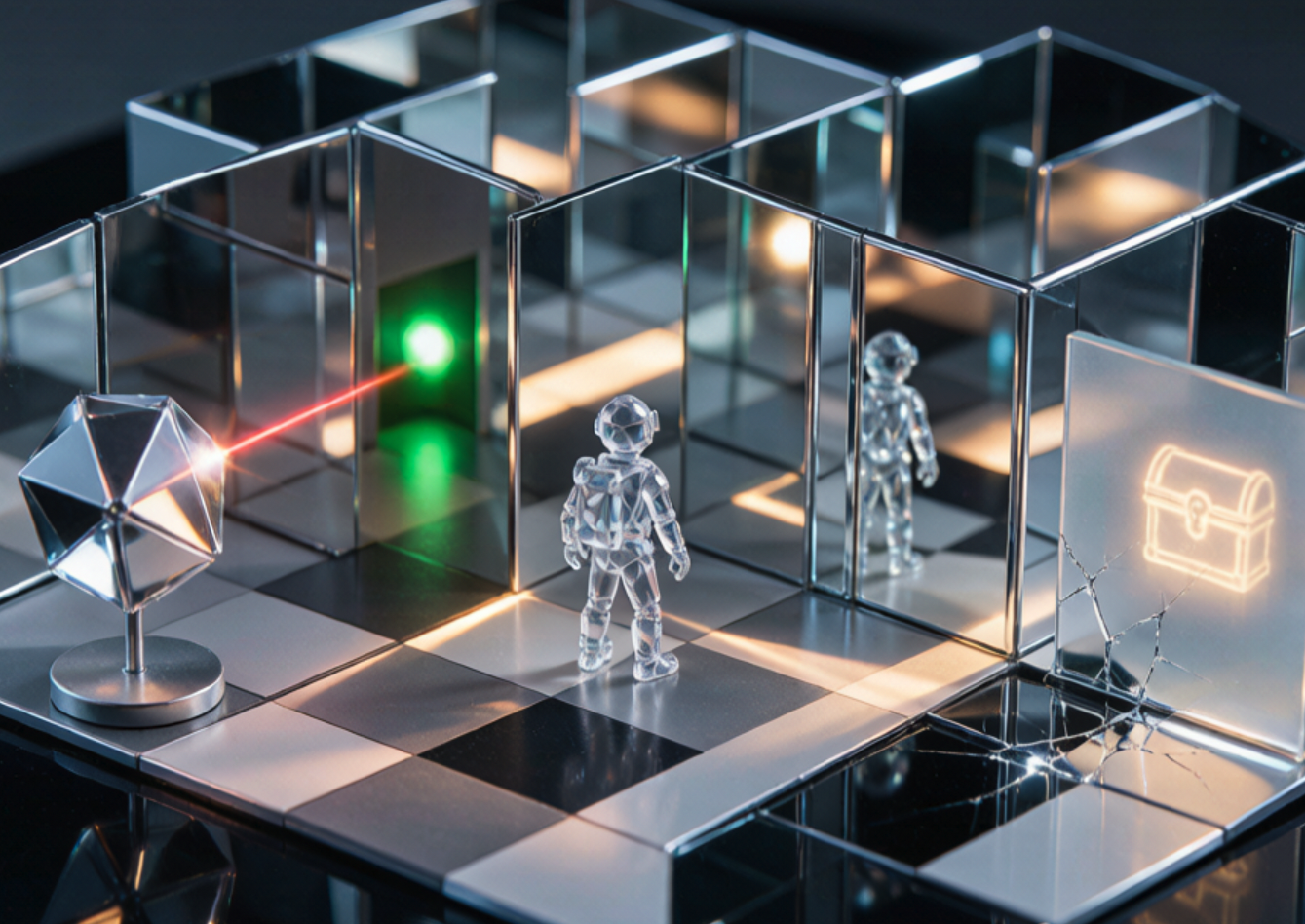
I was ten years old and I broke my nose on a mirror that I was absolutely certain was a hallway.
Let me back up.
Every summer, the traveling carnival set up in the parking lot of the Red Apple grocery store on Route 9. It was not a good carnival. The rides made grinding noises. The food tasted like it had been fried in oil that remembered the Reagan administration. But they had a mirror maze, and I was obsessed with it.
The mirror maze cost three tickets. It was housed in a trailer that smelled like bleach and regret. The walls were floor-to-ceiling mirrors arranged at angles that made no sense. You walked in, and suddenly there were seventeen versions of you walking in seventeen different directions, and none of them were the real one. You could not tell which way was forward. You could not tell which person in the room was actually you.
My strategy, at age ten, was simple: run.
I reasoned that if I ran fast enough, I would find the exit before my brain had time to process the confusion. This is not how mirror mazes work. I learned this when I ran directly into a mirror at approximately the speed of a small, terrified child. The mirror did not break, but my nose made a sound that I have never forgotten. It was not a crack, exactly. It was more like someone stepping on a bag of potato chips in slow motion.
I sat on the floor of the mirror maze, bleeding from my nose, surrounded by seventeen bleeding versions of myself, and I laughed. Not because it was funny. Because I had never experienced anything like it. The world had lied to me. My eyes had lied to me. I had run full speed toward an exit that did not exist, and the mirror had stood there like a wall and said: no.
I have been chasing that feeling ever since.
Attempt #1: The Literal Mirror Maze (2018)
Fifteen years after the carnival, I tried to build a mirror maze in a game. Not a good game. A game jam game. Forty-eight hours. Unity. No sleep.
The idea was simple: remake the carnival mirror maze, but in first person. The player walks through a room. There are mirrors. They reflect the player's character. The player has to find the exit.
I built it in four hours. It did not work. At all.
The problem was immediately obvious: the mirrors reflected the player character, but the reflections moved exactly as you would expect. Your mirrored self turned when you turned. It walked when you walked. It was a perfect copy, and perfect copies are not confusing. They are just copies.
I had recreated the physics of the mirror maze without recreating the feeling of the mirror maze.
A mirror maze does not confuse you because there are copies of you in it. It confuses you because you cannot tell which direction is real. The copies are a side effect. The disorientation is the point. I had built a room with mirrors in it. I had not built a room that lies to you.
I scrapped the first-person version and started over.
Attempt #2: What If the Mirrors Don't Show You? (2019)
My second attempt abandoned physical mirrors entirely.
Here is what I built instead: a puzzle game where every wall is a mirror, but the mirrors do not reflect you. They reflect the room as it would appear if you were standing somewhere else. You walk through a corridor. You turn left. The wall to your right shows a reflection of the corridor continuing straight—a corridor that does not exist. You walk toward it. You hit a wall. The reflection lied.
This was closer to the carnival. Not the same. But closer.
The mechanic worked like this: each mirror showed the room from a different angle—not your angle, but an angle offset by your last movement. If you walked forward, the reflections shifted backward. If you turned left, the reflections turned right. The mirrors showed you a version of reality that was one step behind your actual position. You had to learn to distrust everything you saw and navigate by memory alone.
I brought it to a playtest night at a coworking space in Brooklyn. Seven people played it. Three of them quit within five minutes. Two of them asked me if the game was broken. One person—a man named Greg who wore a beanie indoors—played for forty-five minutes without saying a single word. When he finished, he took off the beanie, looked at me, and said: "I don't trust my eyes anymore."
That is the sentence I wanted. That exact sentence. Ten-year-old me, sitting on the floor of the carnival mirror maze, bleeding from the nose, surrounded by seventeen bleeding copies of himself—that kid would have understood Greg perfectly.
The Thing I Learned Accidentally
I did not set out to learn anything about game design when I built the mirror puzzle. I just wanted to make a game that felt like the carnival. But after the playtest, I noticed something strange.
The players who quit did not quit because the puzzles were too hard. The puzzles were actually very simple. You walked through four rooms. That was the whole game. Four rooms. No enemies. No timers. No inventory. Just four rooms with lying walls.
They quit because they could not trust their own judgment.
There is a particular kind of frustration that comes from your eyes telling you something that your brain knows is false. It is not like difficulty frustration, where you know what you need to do but cannot execute it. It is deeper. It is epistemological frustration. The game is not asking you to be good at something. It is asking you to doubt the primary sense you have relied on since birth.
This is the thing about mirror mazes that I did not understand at the carnival and did not understand when I started building: the mirror is not the obstacle. The mirror is the liar. The real obstacle is your own brain, which wants to believe what it sees.
A well-designed mirror maze does not have more mirrors. A well-designed mirror maze has mirrors placed so that every direction looks equally plausible. The exit looks like a mirror. The mirror looks like an exit. You cannot distinguish them. You have to touch the walls with your hands and feel which ones are cold glass and which ones are empty air.
I did not put this in my game because it was a game jam and I did not have time. But I think about it constantly. The best mirror puzzle in the world would force you to navigate by touch. You would have to close your eyes and walk forward into the unknown, trusting your sense of space rather than your sense of sight. That is the opposite of what games ask you to do. Games are visual. Games say: look at this. A mirror puzzle that works says: stop looking. Look away. Trust something else.
The Portal Test
A year later, I played a Portal 2 community map that used mirrors. Not the official game—a mod. The map was called "Refraction" or "Reflection" or something like that. I do not remember the name. I remember the moment.
There is a room. Simple room. White panels. A single portalable surface on one wall. A mirror on the opposite wall. You fire a portal at the mirror, and the portal appears… somewhere else. Not on the mirror. On a wall you cannot see. The mirror shows you the portal on a wall behind you, but the portal is not there. The mirror is showing you a version of the room where the portalable surface is on the left. The actual portalable surface is on the right.
I stood in that room for twenty minutes.
Not because the puzzle was hard. Because I could not figure out which direction the real room was oriented. The mirror showed me a room rotated ninety degrees from the actual room. My brain kept defaulting to the mirror's orientation. I would look at the mirror, map the room in my head based on what I saw, plan a move, execute it, and immediately fail because the room was not arranged the way I thought it was.
That is the trick. That is the whole trick. The mirror shows you a world that is almost correct. Almost. One detail is wrong. And because one detail is wrong, every decision you make based on that world is wrong. The puzzle is not about mirrors. The puzzle is about learning to doubt.
What I Would Build Now
If I had a year and a budget, here is the mirror game I would build. Not because I think it would sell. Because I think it would make people feel something they have never felt before.
The game starts in a blank room. White. Infinite. You walk forward. A mirror appears in front of you. You see yourself. You turn around. The exit is behind you. You walk out. Easy.
The second room has two mirrors, opposite each other. You see infinite reflections of yourself stretching into the distance. One of the reflections is slightly out of sync. It turns a moment after you turn. It raises its hand when you do not. You notice it. You stop moving. The reflection keeps moving. It walks toward you. You realize it is not a reflection. It is an enemy. Or it is a friend. The game never tells you which.
The third room has no mirrors at all. But the walls show reflections anyway. Reflections of rooms that are not this room. Reflections of yourself standing in places you have never stood, holding objects you have never held. Some of the reflections are accurate. Some are lies. You cannot tell which is which. The game does not help you.
This is what I learned from the carnival, from the game jam, from Greg in the beanie, from the Portal 2 mod. The mirror maze is not about mirrors. It is about the moment when you realize that your senses have been lying to you your entire life, and you have been believing them without question. It is about the moment when you learn to doubt.
That is not a game mechanic. That is a spiritual crisis.
Why the Kid on the Floor of the Carnival Was Laughing
I went back to the carnival the next summer. I was eleven. My nose had healed. The mirror maze was in the same spot, same trailer, same smell of bleach. I walked in. I did not run this time. I put my hands out in front of me like a sleepwalker. I touched every surface before I walked toward it. I felt the cold glass of the mirrors with my fingertips and navigated by texture alone.
I made it through in three minutes. The year before had taken me twenty and a broken nose.
When I came out, I was not proud. I was disappointed. The mirror maze had stopped lying to me. I had learned to read it. The magic was gone.
This is the unsolvable problem at the heart of every puzzle game. The player learns. The puzzle becomes predictable. The wonder evaporates. You cannot make a mirror maze that works forever, because eventually the player learns to see through the mirrors. The only mirror maze that truly works is the first one you ever enter, when you still believe what your eyes tell you.
If I could build a game that gives someone that first carnival feeling—just once, for five minutes—I would consider my career complete. I would consider it more valuable than every other game I have ever made or will ever make. Because that feeling is not about solving a puzzle. It is about discovering that the world is not what it appears to be. It is about breaking your nose on a truth that was hidden in plain sight.
Ten-year-old me, sitting on the floor, bleeding, laughing, surrounded by seventeen bleeding laughing copies of himself—that kid was not laughing at the pain. He was laughing at the revelation. The world had lied to him. The mirror had lied to him. His own eyes had lied to him. And he had just learned something that most people never learn at all: that the obvious thing is not always the true thing, and the clear path is not always the real path, and sometimes you have to walk face-first into a wall before you understand which way you are actually going.
I have been chasing that feeling ever since. I have not caught it yet. I do not think I ever will. That is not a complaint. That is the whole point.
Original Content Declaration — This article was written by the appdgg Editorial Team and represents original work created through independent research and firsthand gameplay experience. Last updated: July 2026.
Other content
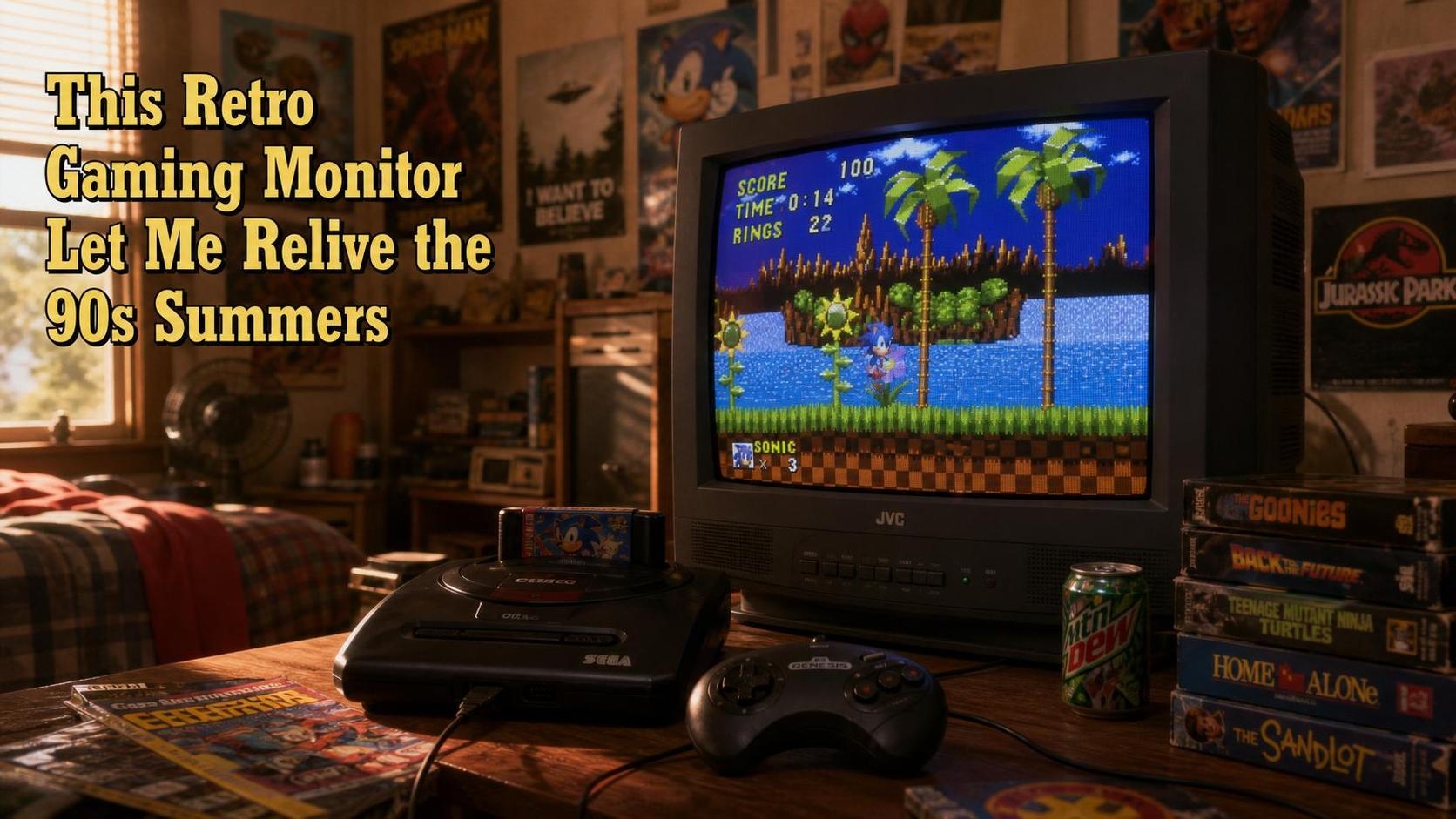
This Retro Gaming Monitor Let Me Relive the 90s Summers
There is a specific smell that belongs to a summer afternoon in the 1990s. It's a mix of hot asphalt, grass someone just mowed, and the warm electrica
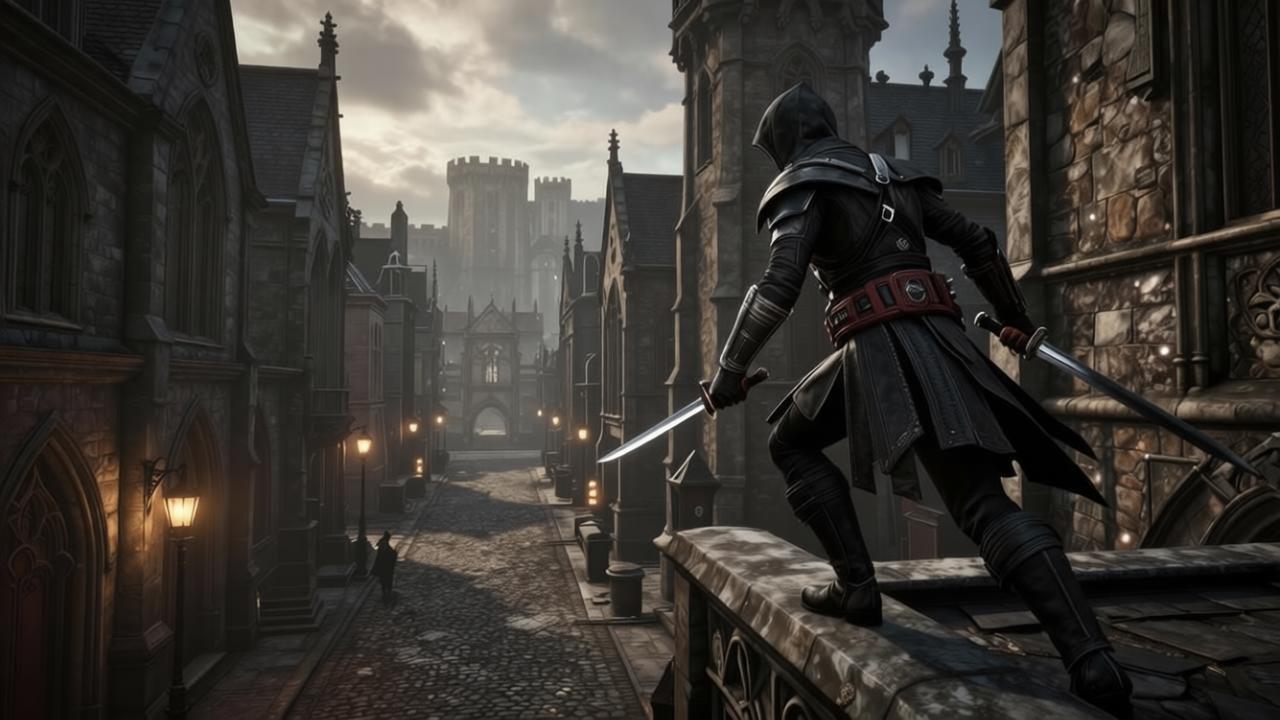
Assassin's Creed Shadows Ended Up Great–If You Played All The DLC
I'll say something that might get me looked at sideways by certain corners of the fanbase. I think Assassin's Creed Shadows is genuinely good. Maybe e
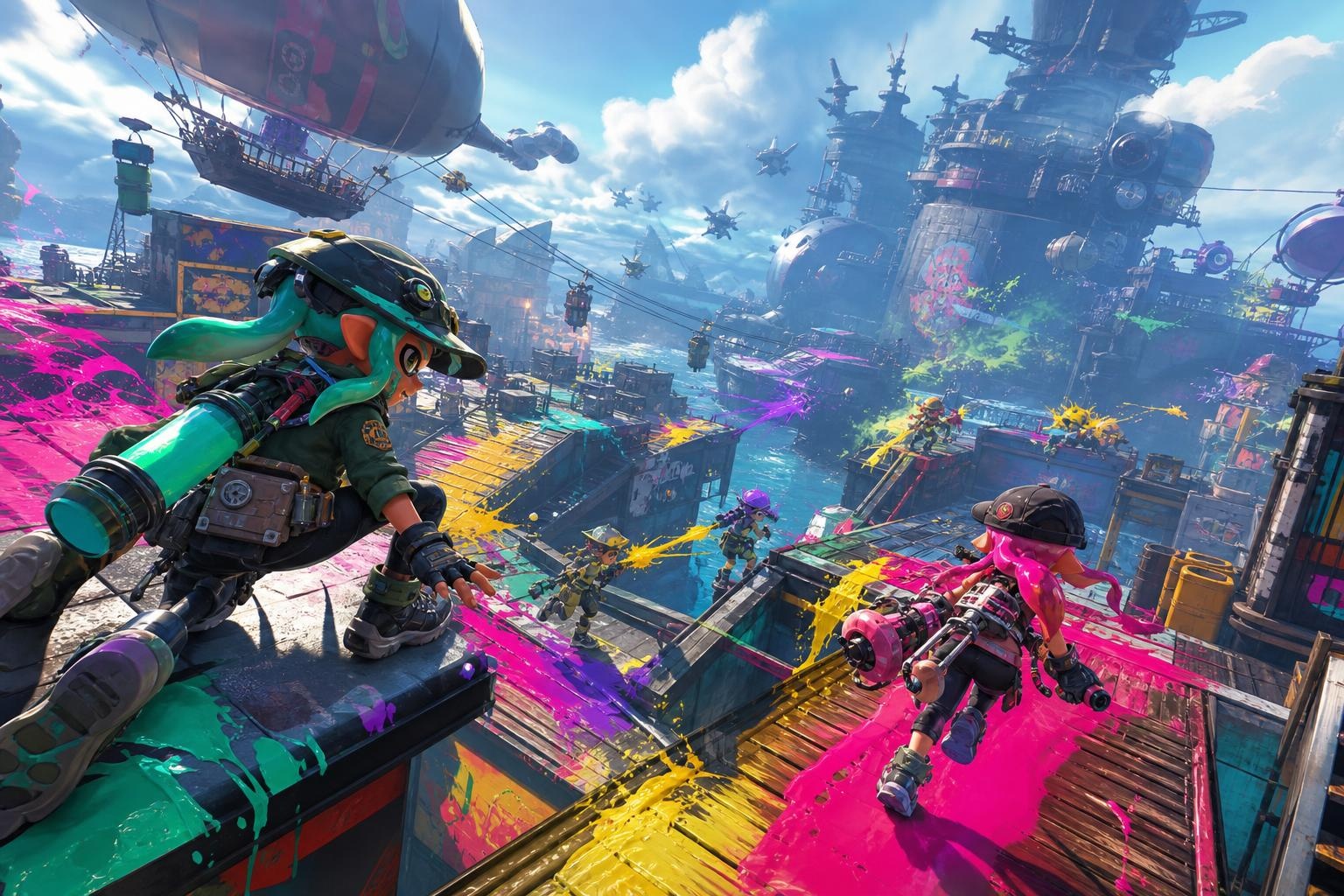
Splatoon Raiders Is A Bold Rethink Of What Makes A Splatoon Game
Splatoon Raiders Flips the Series on Its Head, and That's Exactly the Point For close to ten years, Splatoon has meant one thing to most players. Comp
Prime Slimes: A Guide To Gaming's Greatest Goo-Getters
Prime Slimes: A Guide to Gaming's Greatest Goo-Getters There is something weirdly satisfying about a good slime. Maybe it's the way they jiggle when t