
The Emotional Anatomy of Digital Characters: How AI Is Redefining NPC Expression in Games
The line between a video game NPC and a believable digital character has always been defined by one thing: emotional expression. A guard who repeats t

The line between a video game NPC and a believable digital character has always been defined by one thing: emotional expression. A guard who repeats the same line of dialogue every time you pass is a reminder you are playing a game. A companion who remembers your past choices and reacts with genuine warmth or frustration blurs that boundary. The technological pathways for achieving this kind of emotional intelligence are becoming clearer, driven by the convergence of large language models, memory systems, multimodal interaction frameworks, and real-time animation pipelines.
The Emotional Anatomy of a Digital Character
Before examining the technology, it is useful to understand what components actually constitute "emotional expression" in a game context. Traditional NPCs operate on scripted behaviour trees. Their responses are predetermined. Emotion, if it exists at all, is simulated through pre-recorded voice lines and canned animations. The shift toward genuine emotional intelligence requires a fundamentally different architecture.
A modern emotionally expressive AI character typically comprises four key systems: perception, memory, reasoning, and expression. The perception layer interprets player input—not just text, but tone, speech patterns, and even gameplay behaviour. The memory system stores both short-term conversational context and long-term relationship history. The reasoning layer processes this information through a personality framework to determine how the character should feel and respond. Finally, the expression layer translates that emotional state into dialogue, facial animation, and body language.
This architecture represents a significant departure from the "script tree" approach that has dominated game development for decades. Instead of hard-coding every possible interaction, developers now define a character's emotional parameters and let the AI generate context-appropriate responses in real time.
Perception: Understanding What the Player Is Saying—and How
Emotional expression begins with perception. A character cannot respond appropriately if it cannot understand the player's intent and emotional state. Speech recognition and emotion detection are foundational. Modern systems use automatic speech recognition (ASR) models to transcribe player speech, then layer sentiment analysis on top to detect tone, pitch, and speaking rate. The NVIDIA Riva Parakeet TDT 600M ASR model, for example, can transcribe 25 languages, while the Chatterbox Multilingual 500M model generates expressive, emotionally resonant voices in 24 languages.
Multimodal perception goes further. The Emotion-Adaptive Virtual Human Interaction Architecture (EAVHIA) integrates facial affect analysis, vocal prosody, gesture recognition, and gameplay-derived behavioural signals to build a comprehensive picture of the player's emotional state. In XR-based systems, speech-gesture multimodal perception has achieved 94.3% recognition accuracy, with emotional feedback matching user states at 91.2% accuracy.
A practical open-source implementation is AI-Npc-Town, which uses a Godot game engine frontend with a FastAPI backend to coordinate LLM-based NPC agents. The system analyses player sentiment in each interaction and adjusts NPC responses accordingly.
Memory: The Foundation of Emotional Continuity
Emotional expression is impossible without memory. A character that cannot remember what the player said five minutes ago cannot possibly form a meaningful relationship. The most effective implementations use a tripartite memory architecture.
Short-term memory maintains the immediate conversational context, typically the last ten to twenty exchanges. Mid-term memory stores significant events from the current session—the player making a crucial decision, saying something hurtful, or performing an act of kindness. Long-term memory persists across gameplay sessions, containing the character's core knowledge, relationship history, and accumulated experiences.
AI-Npc-Town implements this structure with NPCs that maintain both short-term and long-term memory. Each NPC uses vector embeddings to store and retrieve relevant memories based on similarity to the current conversation. The Pekingman system similarly stores, retrieves, and references historical interactions to maintain sustained character consistency across long-running interactions.
Relationship tracking is a critical extension of memory. In AI-Npc-Town, each NPC maintains a "好感度" (favour) score that evolves based on player interactions. Every dialogue is analysed for sentiment, and the favour score adjusts accordingly—positive interactions build trust, while negative ones erode it. The Oxyde SDK takes this further with autonomous NPCs that form relationships, remember player interactions, and adapt their goals based on relationship history.
Reasoning: Personality as a Modulating Layer
Memory alone does not create emotional expression. A character's personality determines how they react to the things they remember. Personality trait systems provide a structured way to modulate AI responses. The Bhava emotion engine uses a 15-dimension personality model with 4 trait groups, cosine similarity for personality matching, blending, and mutation. It also implements a 6D PAD (Pleasure-Arousal-Dominance) emotional state vector with decay, triggers, history, and baseline derivation.
A character with high extraversion might be more expressive; one with high neuroticism might react more intensely to negative experiences. OCC appraisal models provide another layer of sophistication. The Bhava system includes an OCC (Ortony-Clore-Collins) appraisal model for goal-aware emotion generation—characters experience emotions based on whether events help or hinder their goals. The Oxyde SDK tracks six emotional dimensions (happiness, anger, fear, trust, energy, curiosity) that influence all NPC responses and decisions, with personality traits that evolve based on player relationships.
Emotion regulation is also implemented in advanced systems. Bhava includes Gross's emotion regulation model (suppress, reappraise, distract) and a McEwen allostatic load model for burnout tracking.
Expression: From Dialogue to Full Embodiment
The final element is expression—actually conveying the character's internal state to the player. Dialogue generation is the most visible expression channel. LLMs generate context-appropriate responses in real time, moving beyond pre-scripted dialogue trees. In AI-Npc-Town, NPCs use a SimpleAgent architecture that retrieves relevant memories, then calls an LLM to generate a response consistent with the character's role and relationship history.
Voice synthesis adds emotional tone. Text-to-speech (TTS) systems modulate pitch, speed, and emphasis to convey emotion. The OmniCharacter model achieves a response latency as low as 289ms while generating role-specific speech responses that contain unique voice traits.
Facial animation and body language complete the picture. NVIDIA's Audio2Face technology uses AI to generate realistic facial animations from audio input, analysing acoustic features like phonemes and intonation to create a stream of animation data mapped to facial poses. It can be streamed in real-time for dynamic, AI-driven characters, providing accurate lip-sync and emotional expressions. NVIDIA has made Audio2Face open source, making it accessible to a wide range of game developers.
NVIDIA's ACE platform integrates these elements into a complete pipeline. The NVIGI SDK enables GPU-optimised inference with compute-in-graphics technology, allowing AI inference to run alongside rendering tasks without impacting frame rate. The platform now supports multilingual AI characters through models like Qwen 3.5 4B, which delivers low-latency responses across 201 languages.
Integration: Tying It All Together
The most sophisticated implementations combine perception, memory, reasoning, and expression into unified systems. Pekingman from MIT and USC connects perception, memory, reasoning, emotion, and action into one continuous agent loop. It ingests multi-source environmental signals, extracts emotional and semantic context, stores and revisits historical interactions, selects behaviour from live context, and produces responsive actions.
The NVIDIA ACE pipeline exemplifies full integration: a player's speech is processed through ASR, the transcription goes to a small language model (SLM) for response generation, TTS synthesises the voice, and Audio2Face drives real-time facial animation—all orchestrated through NVIGI with GPU scheduling to maintain performance.
The Remaining Hurdles
Despite significant progress, several barriers remain. Latency is a persistent challenge—real-time game environments require responses within 100-300ms, and cloud-based LLM inference often exceeds this threshold. Computational cost remains high, though local deployment of quantised models is becoming more feasible. Content control is an ongoing issue—AI-generated dialogue can produce unexpected or inappropriate content, requiring filtering and moderation layers. The uncanny valley remains a factor for embodied characters—the closer the expression approaches genuine human emotion, the more jarring the small imperfections become.
The Bottom Line
The technological pathways for implementing emotional expression in game AI characters are increasingly well-defined. The architecture is clear: perception systems that process player input in context, memory systems that maintain relationship history, personality layers that modulate emotional responses, and expression systems that convey internal states through dialogue, voice, and animation.
What was once research-domain is becoming commercially viable. NVIDIA's ACE platform, open-source frameworks like AI-Npc-Town, and the growing availability of emotion-aware LLMs are all making emotional AI more accessible to developers. The challenge is no longer whether emotional expression in game AI is possible—it is whether the industry can solve the practical hurdles of cost, latency, and content control well enough to make emotionally intelligent characters the norm rather than the exception.
Original Content Declaration — This article was written by the appdgg Editorial Team and represents original work created through independent research and firsthand gameplay experience. Last updated: July 2026.
Other content

This Retro Gaming Monitor Let Me Relive the 90s Summers
There is a specific smell that belongs to a summer afternoon in the 1990s. It's a mix of hot asphalt, grass someone just mowed, and the warm electrica

Assassin's Creed Shadows Ended Up Great–If You Played All The DLC
I'll say something that might get me looked at sideways by certain corners of the fanbase. I think Assassin's Creed Shadows is genuinely good. Maybe e
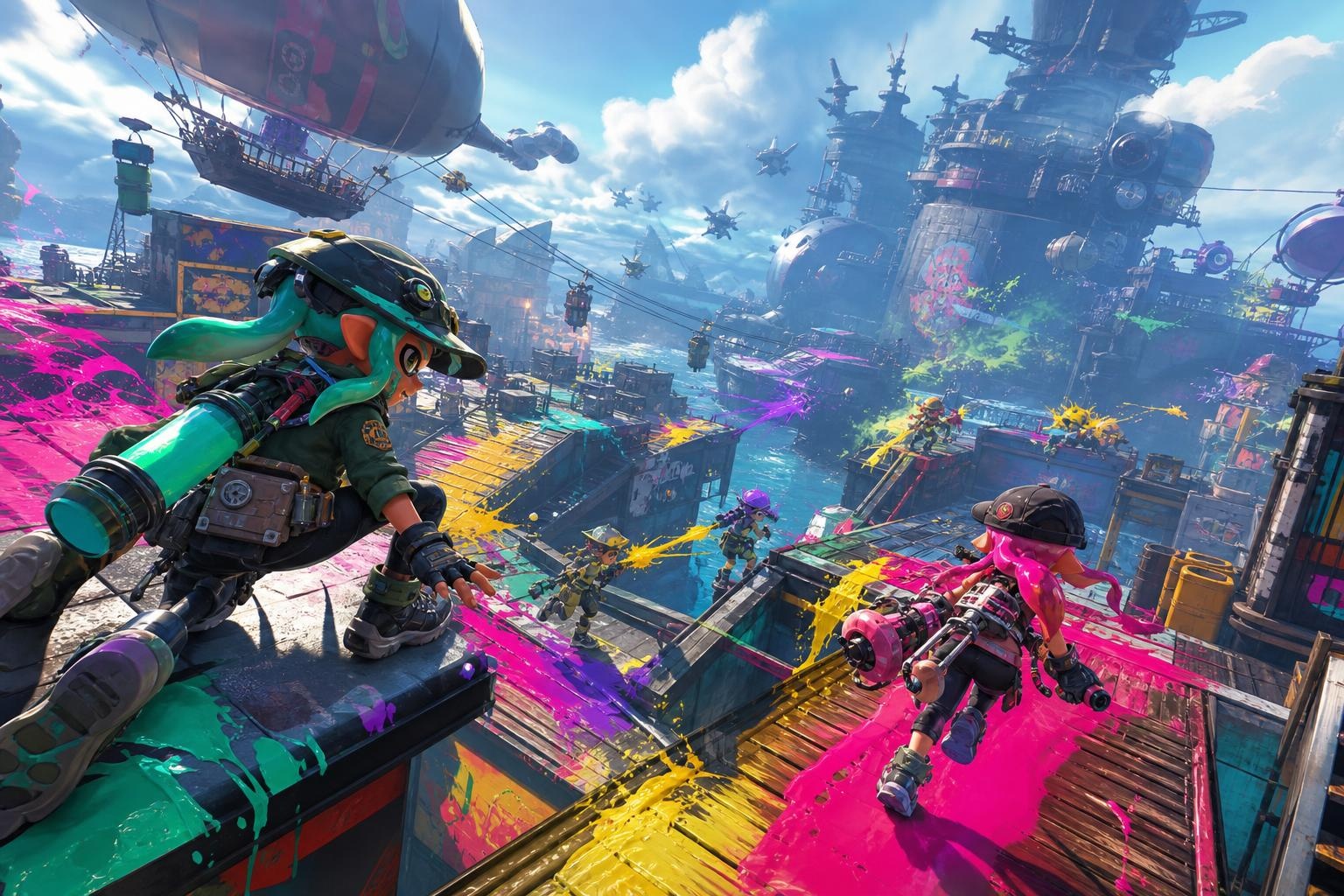
Splatoon Raiders Is A Bold Rethink Of What Makes A Splatoon Game
Splatoon Raiders Flips the Series on Its Head, and That's Exactly the Point For close to ten years, Splatoon has meant one thing to most players. Comp

Prime Slimes: A Guide To Gaming's Greatest Goo-Getters
Prime Slimes: A Guide to Gaming's Greatest Goo-Getters There is something weirdly satisfying about a good slime. Maybe it's the way they jiggle when t