
The Irreplaceable Experience of Specialized Controllers in Certain Game Genres
For most players today, a standard gamepad or mouse and keyboard setup can handle almost any title. You can drive cars, fly planes, shoot enemies, and
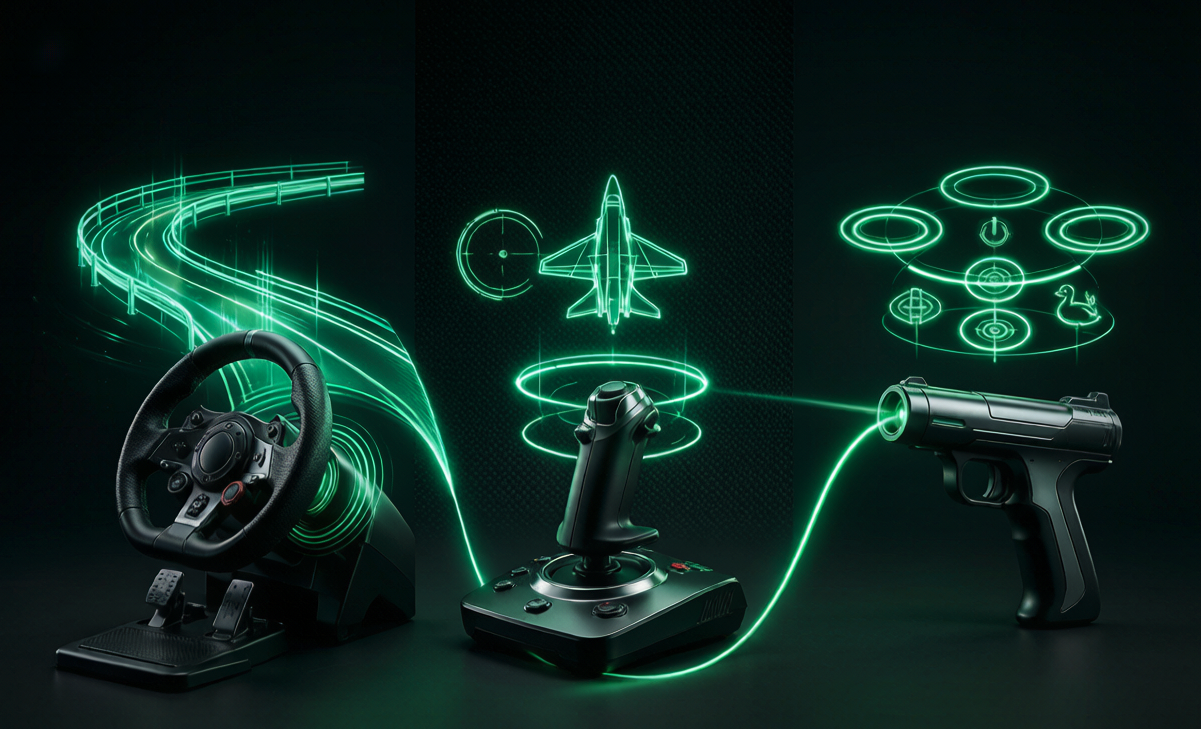
For most players today, a standard gamepad or mouse and keyboard setup can handle almost any title. You can drive cars, fly planes, shoot enemies, and control menus with the same few buttons and sticks. On paper, this makes sense: one device, many uses, less clutter on the desk or in the living room.
But once you spend time with a good steering wheel, a solid arcade‑style joystick, or a responsive light gun, it becomes clear that some genres were never meant to be played on generic hardware alone. These controllers do more than send input signals. They change how your body moves, how your brain processes the game world, and how you remember the experience afterwards. In certain types of games, this difference is so strong that it feels wrong to go back to a pad or mouse.
Below, we look at three types of specialized peripherals—racing wheels, joysticks, and light guns—and why, in specific genres, they offer something that ordinary controls simply cannot match.
1. Racing Wheels: Turning Driving Games into Driving Experiences
Driving games are the clearest example of a genre where a dedicated controller dramatically transforms the experience. On a standard pad, steering is a matter of nudging an analog stick or tapping a digital button. You watch a bar or a minimap to see if you are turning too much or too little. It is functional, but also quite abstract.
With a proper racing wheel, the relationship between player and car changes immediately:
Full‑range steering
Instead of tiny thumb movements, you turn a wheel with your whole arm. Small corrections on a straight line, a firm rotation into a hairpin, quick counter‑steer when the back of the car starts to slide—these actions feel close to real driving habits. Over time, you stop staring at UI elements and begin to trust your own sense of rotation.
Force feedback as information, not just a gimmick
A good wheel pushes back, vibrates, and pulls in response to the virtual road. You feel resistance when you turn too sharply at high speed, or a lightness in the wheel when tires lose grip. On a pad, rumble is generic; on a wheel, feedback carries detailed data about weight transfer, surface changes, and traction. This lets players react earlier, not because of a number on a HUD, but because the wheel "tells" them.
Pedals and body involvement
Separate pedals for brake and throttle add another layer of nuance. Feathering the gas mid‑corner or easing off the brake as you reach the apex becomes a rhythm that involves feet as well as hands. Your body adopts a driving posture, and the mental model in your head—car, speed, corner—starts to align with how you would treat a real vehicle.
For serious racing simulators, this difference is not just about immersion. It can directly affect performance. Controlling steering, braking, and throttle with more natural motions allows for more precise inputs, especially over long races where thumb fatigue or small stick misjudgments can ruin a lap.
In arcade racers, the effect is more emotional than technical. The same car chase or drift sequence played with a wheel feels louder, more physical, and more memorable. Sliding a car around a corner with hands at "9 and 3" and a pedal to the floor creates a story in the player's mind that a thumbstick rarely matches.
2. Arcade Sticks and Flight Joysticks: Translating Classic Genres Properly
Joysticks and arcade sticks cover several different sub‑types of controllers, but they share one idea: they are built for continuous, expressive movement in a way D‑pads and thumbsticks cannot fully copy.
2.1. Arcade Sticks for Fighting and Retro Titles
Traditional arcade sticks with large buttons and a sturdy lever have a deep history in fighting games and classic arcade titles. Players who grew up in arcades developed muscle memory around these layouts, and modern hardware continues that tradition at home.
Their advantages show up in details that seasoned players notice right away:
Clean cardinal and diagonal inputs
Quarter‑circle motions, fast double taps, or precise diagonals feel more defined on a solid lever with gates than on a small analog stick. In a fast match where a missed input can cost the round, this clarity matters a lot.
Button layout for complex chains
Six or eight large buttons arranged in two rows make it easier to hit specific combinations with multiple fingers, rather than rolling the thumb around four face buttons and bumpers. Long combos, rapid cancels, and timing‑sensitive moves become more manageable.
Connection to genre culture
Fighting games, beat 'em ups, and many classic shooters were originally built around this type of hardware. Playing them with a stick does more than improve input; it places the player in the same physical context as the original design. That sense of "this is how it was meant to be played" has its own value.
While you can technically play these games on a pad, the stick often feels like the natural shape for them. It is not just about nostalgia; the entire control philosophy of many of these titles assumes a lever and a row of buttons.
2.2. Flight Sticks for Simulators and Space Games
Flight sticks or HOTAS (hands on throttle and stick) setups are another kind of joystick where genre and device are tightly linked. In flight simulators or space combat games, a mouse and keyboard can be accurate, but they do not feel like flying.
With a flight stick:
Pitch, roll, and yaw become physical gestures
Pulling back to climb, pushing forward to dive, rolling to bank—all of these map directly to how aircraft are controlled in real life. The movement range and resistance of the stick communicate how violently you are forcing the plane.
Separate throttle adds fine control
Being able to gently push a dedicated throttle lever rather than tapping keys or pushing an analog trigger lets players set and adjust speed more naturally. For games that simulate fuel use, stall speeds, and landing procedures, this control is especially valuable.
Button mapping around the grip
Triggers and hats around the stick handle suit common pilot actions: firing weapons, switching views, trimming, or adjusting flaps. Doing all this without taking your hands off the main controls keeps immersion high and reduces the sense of "typing commands" into a sim.
Space combat games benefit similarly. Dogfights gain weight and rhythm when you pull a physical stick to line up shots or twist to dodge incoming fire. The extra involvement of arms and shoulders changes each engagement into a small physical event rather than a series of mouse sweeps.
3. Light Guns: Point‑and‑Shoot as a Unique Kind of Fun
Light guns occupy a special place in gaming history. From classic arcade cabinets to home console accessories, they turned shooting games into something closer to carnival booths than traditional video games. While modern displays and technology have made traditional light guns harder to support, the core experience they created remains hard to replace.
The main strengths of light gun play are straightforward but powerful:
Direct mapping of aim
When you point a gun‑shaped controller at the screen and pull the trigger, your brain treats the action as almost the same as aiming at something in the real world. There is no mental step of moving a crosshair with a stick or mouse. Your eyes, hand, and target line up in a single gesture.
Fast, instinctive shooting
Many rail shooters and gallery shooters are built around quick reactions, crowd control, and target prioritization. With a light gun, you rely on reflex and intuition. Hit or miss, the motion is immediate, and repeated shots become almost rhythmic.
Social and physical energy
Two players with light guns standing side by side, leaning into the screen, shouting directions at each other—this is a very different atmosphere from two players clicking mice in silence. The controller makes you stand, move, and sometimes even duck or lean, even if the game does not literally track those motions.
Trying to emulate this with a pad or mouse always feels like a compromise. It may be mechanically similar—the same enemies, same patterns—but the emotional peak is lower. Light guns turn a simple shooting gallery into a kind of performance, one that lives in body memory long after the game ends.
4. Why Generic Controllers Still Cannot Fully Replace These Experiences
As game engines, input mapping, and accessibility options advance, it is tempting to think that one controller could handle everything perfectly. Yet specialized devices endure because certain genres rely as much on how you act as on what you press.
Racing wheels, arcade sticks, flight joysticks, and light guns all have a few things in common:
They encourage larger, more natural movements instead of tiny finger adjustments.
They reduce the gap between everyday physical experience (driving, flying, pointing) and in‑game actions.
They shape the way designers think about difficulty, feedback, and pacing in those genres.
A racing simulator can be tuned differently if the developers know that many players use wheels. A flight sim can assume a stick for common maneuvers. A fighting game can rely on motions that feel natural on a lever. A rail shooter can be balanced around the speed of a human arm snapping from one target to the next.
That is why, for certain categories of games, these peripherals are not just "nice extras." They define the edge where a game stops feeling like a set of symbols on a screen and starts to feel like a direct, physical experience. You can still clear the same stages with a pad or a keyboard, but the quality of the memory you take away—and the way your body remembers playing—belongs to the specialized controller.
Original Content Declaration — This article was written by the appdgg Editorial Team and represents original work created through independent research and firsthand gameplay experience. Last updated: July 2026.
Other content
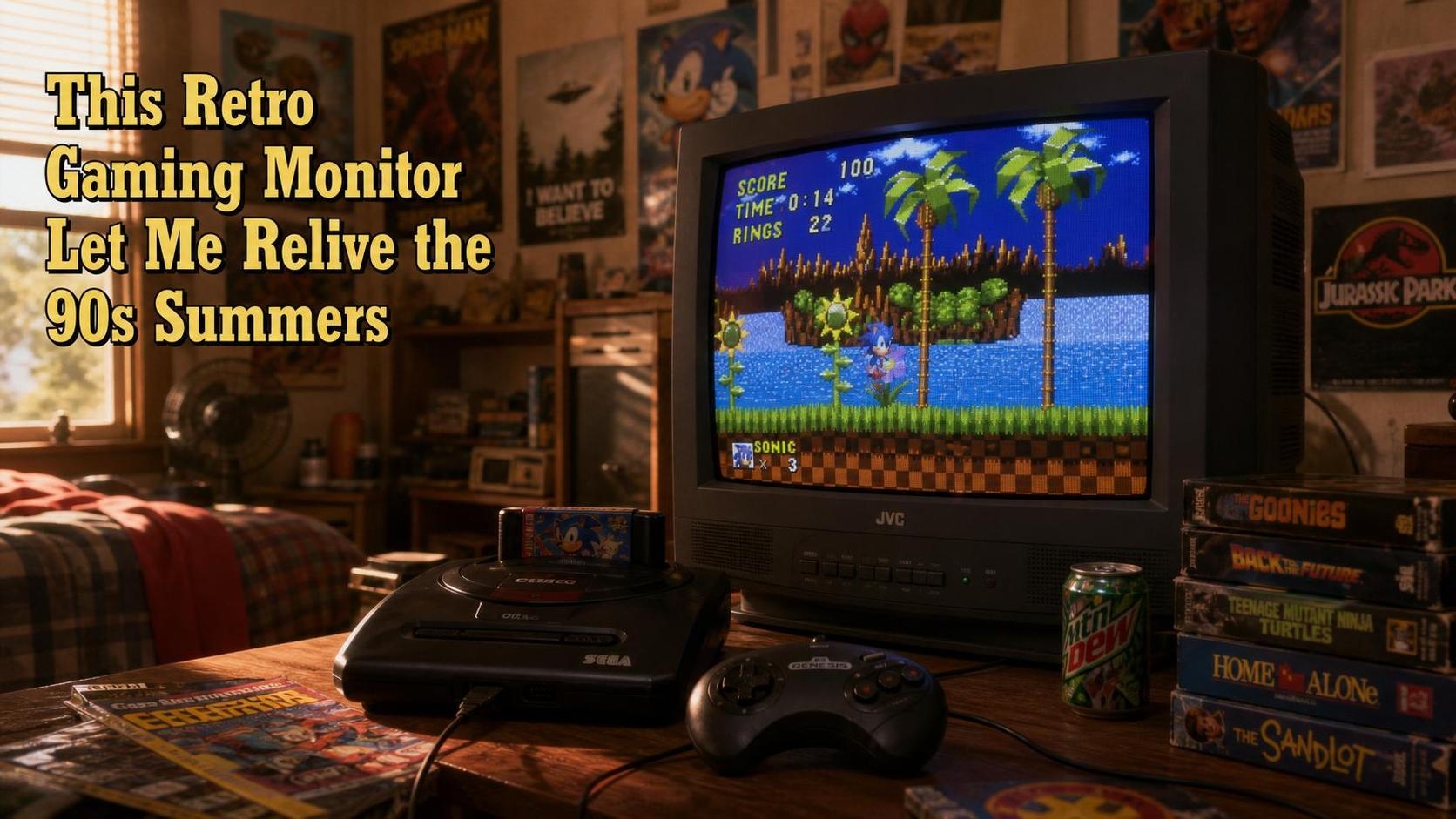
This Retro Gaming Monitor Let Me Relive the 90s Summers
There is a specific smell that belongs to a summer afternoon in the 1990s. It's a mix of hot asphalt, grass someone just mowed, and the warm electrica
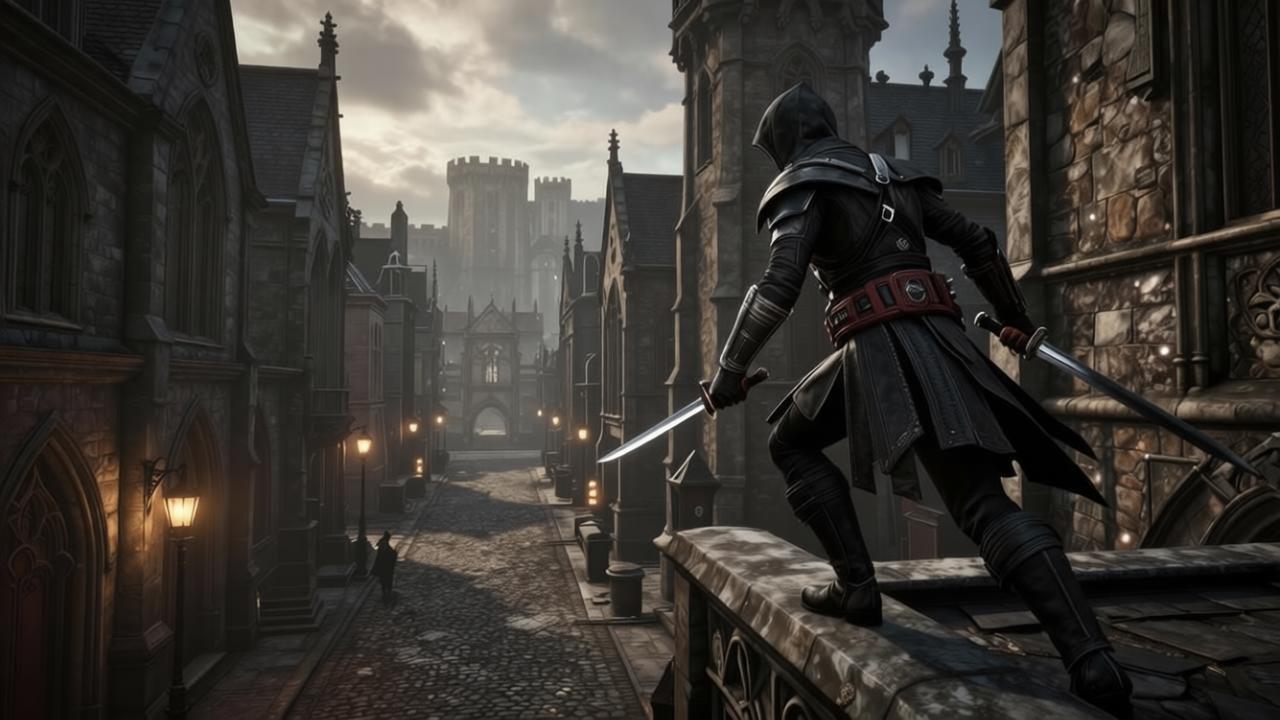
Assassin's Creed Shadows Ended Up Great–If You Played All The DLC
I'll say something that might get me looked at sideways by certain corners of the fanbase. I think Assassin's Creed Shadows is genuinely good. Maybe e

Splatoon Raiders Is A Bold Rethink Of What Makes A Splatoon Game
Splatoon Raiders Flips the Series on Its Head, and That's Exactly the Point For close to ten years, Splatoon has meant one thing to most players. Comp

Prime Slimes: A Guide To Gaming's Greatest Goo-Getters
Prime Slimes: A Guide to Gaming's Greatest Goo-Getters There is something weirdly satisfying about a good slime. Maybe it's the way they jiggle when t