
Voxels Are Back, and This Time They're Not Just Minecraft
I'll be honest, I had written voxels off. Somewhere around the fifth or sixth Minecraft clone, I filed the technology under "solved problem, limited c

I'll be honest, I had written voxels off. Somewhere around the fifth or sixth Minecraft clone, I filed the technology under "solved problem, limited ceiling" and stopped thinking about it. The blocky aesthetic had become a genre marker, not a technical choice, and I assumed that was the ceiling. Voxel games looked like voxel games because that's what voxel games were.
I was wrong about that, and the thing that made me realize it was Donkey Kong Bananza.
What voxels actually are, in case you also forgot
The basics first, because I think a lot of people conflate the visual style with the underlying technology, and the distinction matters here. A voxel, volumetric pixel, is the 3D equivalent of a 2D pixel. A regular 3D model made of polygons is a hollow shell. It's a surface. A voxel model is solid, built from individual units in a three-dimensional grid, and each unit can be added, removed, or modified on its own. That's the whole difference, but it's the difference that matters. A polygon wall is a picture of a wall. A voxel wall is actually made of stuff.
This is why Minecraft's worlds look the way they do, and also why they can be mined and built into at that granular level. The visual style was a consequence of the technology, not the point of it. I think that got lost somewhere in the decade of clones that followed.
Donkey Kong Bananza, which is the one that changed my mind
Nintendo's Donkey Kong Bananza for the Switch 2 is the example that forced me to reconsider, and I suspect it's the example that's going to force a lot of other people to reconsider too. The central mechanic is complete environmental destruction. You punch the ground, the ground is gone. Not in a scripted "this section is destructible" way. In a systemic, the engine literally deleted the voxels where your fist was, way.
One level alone contains over 340 million voxels. I had to pause on that number. We're not in Minecraft territory anymore. We're in territory where the voxel count of a single level exceeds the voxel count of entire games from a decade ago, and it's running on a handheld.
The thing that actually impressed me, though, is that Nintendo deliberately avoided the boxy look. The voxels are an internal structural tool. The game generates polygon meshes dynamically from the voxel data, so what you see on screen is smooth and detailed, running at 60 frames per second, and it doesn't look like a voxel game at all. It looks like a Nintendo game. The voxels are doing the work behind the scenes, and the rendering layer is something else entirely. One developer described the goal as making something "beautiful" to destroy, which is a phrase that stuck with me because it captures something specific about the design intent. The destruction has to look good, not just function correctly. The aesthetics and the simulation are tied together.
The pipeline Nintendo built is also more practical than I expected. They made custom voxel modelling tools so artists could combine materials and test gameplay ideas immediately, and they built a conversion pipeline to turn conventional polygon models into voxel data. Which means they didn't have to throw away their existing asset workflow. They could take things they'd already made, voxelise them, and make them destructible. That's the kind of unglamorous engineering decision that determines whether a technology actually gets adopted, and I think it deserves more attention than it's gotten.
The indie and academic stuff, which is stranger
Beyond Nintendo, the voxel space is getting weird in a way I find more interesting than the AAA side. Lucid Blocks, built by an MIT student, combines procedural voxel generation with surreal, dreamlike aesthetics to create infinite explorable landscapes. It's pulled "overwhelmingly positive" on Steam, which tells me the voxel aesthetic still works when someone applies it with an actual creative vision rather than as a default. The fact that one person built it is also worth noting. Voxel tooling has gotten accessible enough that a solo developer can produce something that competes on Steam quality-wise, which was not true five years ago.
MIT researchers also built Envoxel, which is the thing I keep coming back to. It's a tool that uses generative AI for live voxel world editing. You carve out a section of a voxel world, prompt the AI to fill the gap, and it does. The critical detail is that the output stays in voxel form. It's not generating an image of a landscape. It's generating editable voxel data, which means you can take what the AI produced and modify it further, or delete parts of it, or build on top of it. The AI is a collaborator inside the voxel editing process, not a black box that spits out a finished asset. I think this is a meaningfully different category from the text-to-image AI tools that have dominated the conversation, and I'm surprised it hasn't gotten more attention.
Then there's Voxile, which is a custom engine with its own dedicated programming language built for hardware-accelerated ray tracing in voxel worlds. It achieves photorealistic lighting and global illumination. Which is the thing that breaks my brain a little, because voxels and photorealism have been treated as opposites for so long that seeing them combined feels wrong. Voxile proves they're not opposites. They were just never tried together at this level of engineering rigor.
Why now, which is the question I can't fully answer
I've been trying to figure out why voxels are having a moment right specifically, and I think it's a few things landing at the same time, though I want to be careful about presenting them as a clean list because they overlap.
The gameplay argument is the most obvious one. Voxels enable dynamic worlds where mining, building, and destruction are systemic rather than scripted. The granularity creates what gets called emergent mechanics, gameplay that arises from the basic properties of the system rather than from designer intent. I think this is real but I also think it's been true since Minecraft, so it doesn't explain the timing.
Development efficiency is part of it. Voxel tools are more accessible than complex 3D modelling software, and artists can iterate faster on level design. Nintendo's polygon-to-voxel conversion pipeline is a concrete example of this. But again, this has been true for a while.
Hardware is the thing that actually changed. The memory and processing constraints that used to cap voxel games are diminishing enough that you can manage worlds with hundreds of millions of voxels, or pursue real-time ray tracing in a voxel engine, without the game choking. 340 million voxels in a single Switch 2 level is the proof. That wasn't possible on the Switch, and the Switch wasn't that long ago.
And then there's AI, which is the newest factor and the one I'm least sure about. Voxels are a good output format for AI world generation because the format is structured and editable, unlike an image or a mesh. Envoxel demonstrates that AI can sit inside the creative process as a collaborative tool rather than a generation endpoint. Whether that becomes a real workflow or stays a research demo, I don't know yet. I suspect it becomes real, but I've been wrong about AI tooling adoption before.
What I'm watching for
I don't want to oversell this. Voxels are not about to replace polygons as the default approach to game rendering, and I don't think anyone serious is arguing they will. What's happening is more specific than that. Voxels are becoming a viable choice for a specific category of problems, dynamic worlds, systemic destruction, procedural generation, AI-assisted editing, where polygons have always been a compromise.
Donkey Kong Bananza is the proof that a AAA studio can use voxels at scale without the result looking like a Minecraft clone. Envoxel and Voxile are the proof that the research community sees capabilities in the format that the game industry hasn't fully explored yet. Lucid Blocks is the proof that a solo developer can build something competitive with voxel tooling today.
Whether any of this produces gameplay that actually feels new, as opposed to familiar gameplay executed with a different underlying technology, is the part I can't predict. I thought Minecraft had already shown us what voxel gameplay looked like, and maybe it had, for 2011. What Nintendo and the MIT projects are suggesting is that we haven't seen what voxel gameplay looks like when the voxel count is two orders of magnitude higher and the rendering layer stops being the limiting factor. I'm not sure what that produces. I'm fairly sure it produces something, and I'll be paying attention to what comes after Bananza to see if anyone figures out what.
Original Content Declaration — This article was written by the appdgg Editorial Team and represents original work created through independent research and firsthand gameplay experience. Last updated: July 2026.
Other content
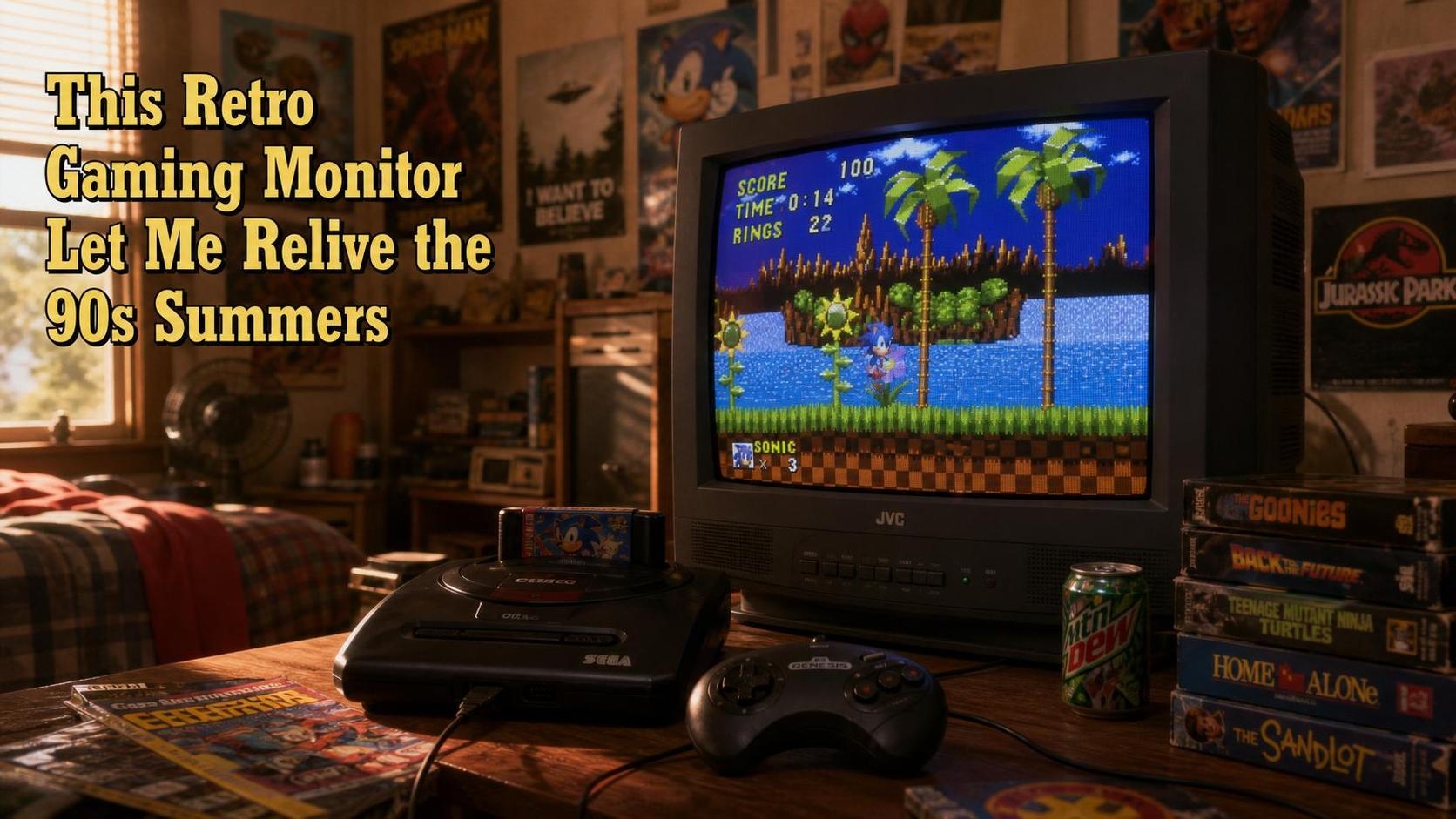
This Retro Gaming Monitor Let Me Relive the 90s Summers
There is a specific smell that belongs to a summer afternoon in the 1990s. It's a mix of hot asphalt, grass someone just mowed, and the warm electrica
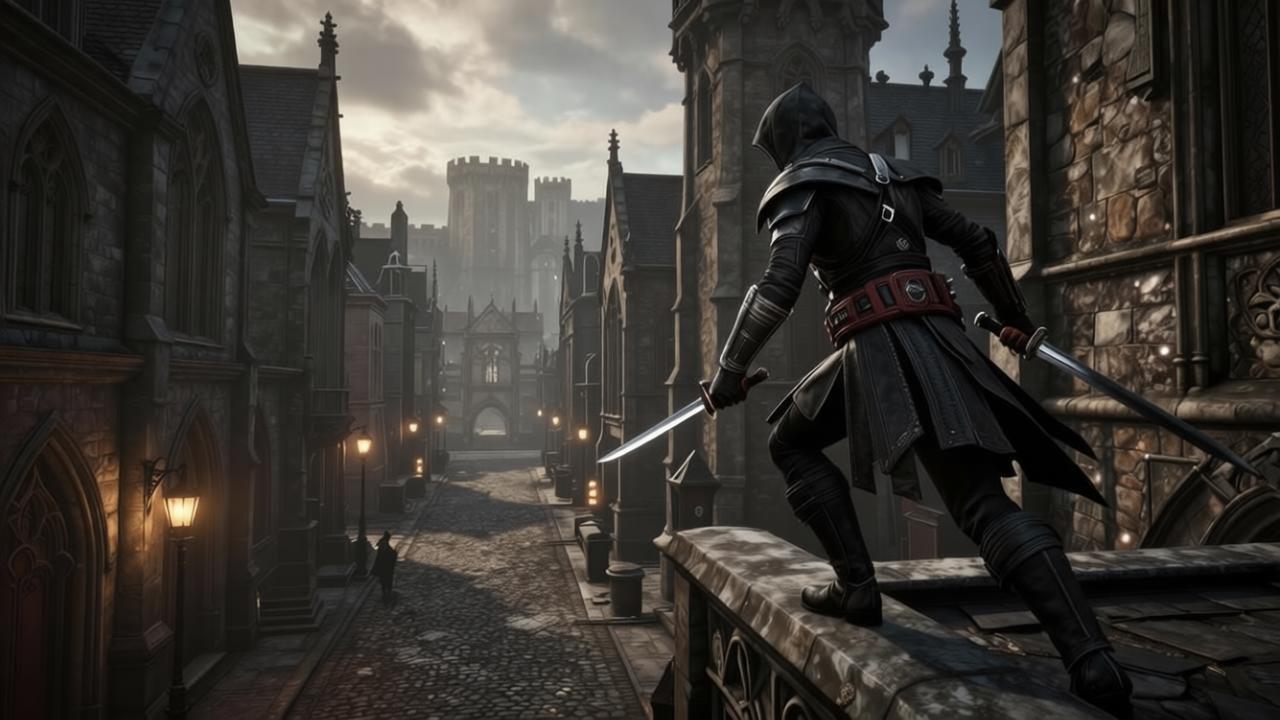
Assassin's Creed Shadows Ended Up Great–If You Played All The DLC
I'll say something that might get me looked at sideways by certain corners of the fanbase. I think Assassin's Creed Shadows is genuinely good. Maybe e

Splatoon Raiders Is A Bold Rethink Of What Makes A Splatoon Game
Splatoon Raiders Flips the Series on Its Head, and That's Exactly the Point For close to ten years, Splatoon has meant one thing to most players. Comp

Prime Slimes: A Guide To Gaming's Greatest Goo-Getters
Prime Slimes: A Guide to Gaming's Greatest Goo-Getters There is something weirdly satisfying about a good slime. Maybe it's the way they jiggle when t