
Automotive
Dashboard lights you should not shrug off on the drive home
Not every warning light means pull over this second, but some of them should change your plan fast. The trick is reading the light together with what the car is doing.
The first question is simple: steady light or flashing light?
People often lump every dashboard light into one emotional bucket: bad, but maybe not tonight. The car usually gives you more information than that. A steady light often means the problem needs attention soon. A flashing light usually means the problem is active right now and may get worse if you keep driving like normal.
The check-engine light is the classic example. A steady check-engine light can mean the car still runs well enough to get home and schedule service. A flashing one, especially if the engine is shaking, stumbling, or low on power, is a different conversation.
You do not have to name the failed part from the driver seat. You just need to sort the warning into one of two buckets: something to plan for soon, or something that changes the trip immediately.
Oil pressure is not the same thing as low oil level
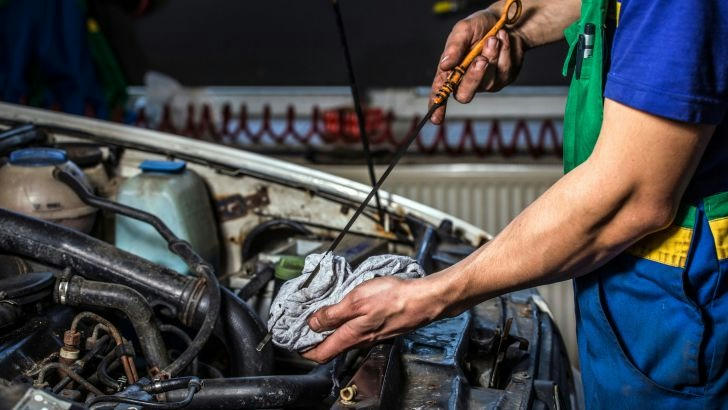
Drivers mix these up all the time because both warnings sound like "something about oil." They are not interchangeable. A low oil level message may mean you are down on oil and need to check the dipstick, inspect for leaks, and figure out why the level fell in the first place.
An oil pressure warning is more serious. The issue is no longer just how much oil is in the engine. It is whether the engine is getting the lubrication it needs while running. That can go bad fast.
If oil pressure is the warning, the safe move is to stop as soon as you can do it safely. This is not the light to negotiate with on the way to one more store, one more pickup, or one more stop sign.
Temperature warnings deserve respect fast
An engine temperature warning usually shows up after something in the cooling system is already off. Low coolant, a stuck thermostat, a failed fan, a leaking hose, or a blocked airflow path can all push the gauge in the wrong direction.
The useful clue is not just the light. It is the whole picture. Is the gauge climbing higher than usual? Do you smell coolant? Is steam coming from under the hood? Did the cabin heat suddenly go cold? Those details tell you the car is moving out of normal territory.
Turning the cabin heat on can sometimes help buy a little time while you move to a safe place, but it is not a repair. When a car is overheating, the goal stops being "finish the drive" and becomes "avoid engine damage."
Brake, battery, and charging lights tell different stories
A brake light can mean something small, like the parking brake not being fully released. It can also mean low brake fluid, a hydraulic problem, or a system that needs inspection now, not next month. That is why this light deserves a quick read instead of a shrug.
A battery or charging light tells a different story. In many cars it means the battery is not being charged normally while the engine runs. People often assume the battery itself is the whole problem, replace it, and then get the same light a few days later.
If the charging light shows up with dim headlights, fading dash brightness, slow windows, or a restart that suddenly feels weak, the charging system belongs high on the list. The battery may be suffering, but it may not be the original cause.
- Brake light plus soft pedal or fluid loss means stop treating it like a small issue
- Charging light plus dim accessories often points past the battery itself
- More than one warning at once can mean one root electrical problem, not three separate disasters
ABS, traction, and tire warnings are easier to read when you stay specific
Some lights scare people mostly because the symbols are easy to forget. ABS, traction-control, and tire-pressure warnings fall into that category. They matter, but they do not all mean the same thing and they do not all require the same response.
A tire-pressure warning might mean one tire is slowly leaking, the weather changed, or the system needs a reset after service. An ABS or traction light can mean the car has lost part of a safety system, even if basic braking still feels normal. That is not the same as "the car is fine." It is closer to "drive more cautiously and get it checked."
This is where specifics help. One light after a cold snap is a different story from one light plus a pull to one side, a steering change, or a tire that visibly looks low. The more ordinary the symptom sounds, the easier it is to miss something worth checking.
Pair the light with what the car is doing
A warning light by itself tells only part of the story. The better clue is the light plus the symptom. Rough idle, loss of power, a burning smell, weak acceleration, squealing, or a temperature change all help narrow the urgency.
This also makes service conversations less messy. Saying "the battery light came on and the headlights went dim at the same time" is much more useful than saying "some icon popped up." Same car, same problem, much better description.
Small notes help more than people expect. Did it happen only after startup? After highway driving? In stop and go traffic? Right after fuel? During rain? Those details make the next step less random and can save time when someone scans or inspects the car.
The owner manual is boring right up until it saves you time
Most people do not open the owner manual unless they are already annoyed. Fair enough. But warning lights are one place where the manual earns its spot in the glove box or the phone app.
It will not replace diagnosis, but it will usually tell you what system the light belongs to and whether the manufacturer treats it like a caution, a service message, or a stop-driving warning. That is a better starting point than memory, guessing, or whatever a forum post said about a different model.
If your car also shows text next to the symbol, take a photo before you shut it off. People forget the exact message surprisingly fast, and wording matters.
A warning that disappears still counts
This catches a lot of drivers. The light comes on for ten minutes, then the car behaves, then the symbol disappears on the next restart. That feels like permission to move on. Sometimes it is. Sometimes it is just an intermittent problem waiting for a worse moment.
A one-time light is still worth noting. Write down when it happened, what the weather was like, whether fuel was low, whether the engine ran rough, and whether anything changed after you restarted the car.
Intermittent problems are annoying because they do not always fail on command. A short note made on the day it happens is often more useful than trying to remember details a week later when the shop asks what the car did.
Do not clear the anxiety by ignoring the light
A lot of drivers do this because it works just often enough to become a habit. The light goes away once. The car still starts. Nothing explodes. So the problem gets pushed into next week.
You do not need panic. You need a short list: what light came on, whether it flashed, what the car felt like, and whether the symptom repeated on restart. That is already enough to make a much better decision.
Sometimes the right answer is "drive home carefully and book service." Sometimes it is "stop soon and do not keep forcing it." Either way, writing the warning off is the weakest plan. If you notice a pattern we missed, send it to [email protected].
Sources and image note
Images on appdgg study pages come from licensed stock, manufacturer or agency reference material cleared for editorial use, or simple in-house crops and overlays. If an older asset cannot be traced in our asset log, we replace it or remove it.
- NHTSA road safety guidance
- AAA car care education library
- Vehicle owner manuals and dashboard warning references
Keep reading
This article sits inside the Automotive basics topic hub. You can continue with the hub page or jump straight into the recommended quiz.
Topic hub
Automotive basics
Starter pages for drivers who want to understand warning signs, routine checks, and the small habits that prevent avoidable roadside trouble.
Quiz page
Basic Car Maintenance Checks
A practical starter quiz about flat tires, tread wear, warning signs, and the routine checks that keep a daily driver safer.