I closed my eyes when I jumped off the cliff.
The sound of the wind didn’t come. It was a low buzzing sound, like something huge singing in the distance. I opened my eyes and found that I was not falling, but floating. Underfoot is a white ice field, and at the end of the ice field is the sea — the shiny and still black sea surface. Jupiter hangs at the end of the sea, which is so big that people forget to breathe.
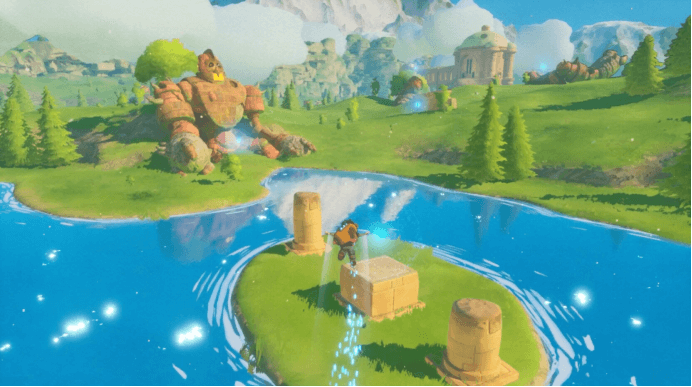
I don’t need to walk. Gently push the joystick, and the body will slide forward. Push it again, and it will be lifted up. The air here is thick, thickness to support me. I learned to walk along the invisible airflow, like a leaf flowing along the stream. Sometimes when the airflow is gone, I slowly descend. Finally, I gently tap my toes on the ice, and there is no sound.
The world is so quiet that you can hear your own heartbeat. No, I heard the ice’s heartbeat. There was a slight crackling sound under my feet, like ice turning over in my sleep. There was a dull rumble in the distance, and then I realized that it was the underground warm current surging. When gliding, there is only that eternal buzzing in the ear, not noisy, like the snoring of the planet when it is napping.
I’m no longer in a hurry to go anywhere. The game asked me to find the remains of the colony, but I always stopped halfway. Because I saw blue light flowing under the ice, like a sealed Milky Way. Because when flying over a plain, tens of millions of metal flowers suddenly bloomed under my feet, jingling into one. No monsters jumped out, and nothing wanted to kill me. Danger is also quiet — a piece of ice that looks thick, but it cracks when you step on it; the white storm that slowly rolls up on the distant horizon is so beautiful that you forget to escape.
I found the first artificial thing in a cave. A table, two chairs, and an overturned cup. Coffee stains spilled on the console and froze into permanent stains. The people here left in a hurry, but they didn’t take the picture on the wall — the sunset on the earth, the kind of warm orange that I have never seen.
Later, I found a small greenhouse. The glass was broken, and the wind and snow poured in, but a lamp was still on, shining the only purple flower. It shouldn’t live here. It belongs to a warmer world. The person who planted it must know that it will not live long, but it still planted it. I stood in front of the flower for a long time until Jupiter rose above my head.
Finally, I found the ship. The wreckage of the huge spacecraft was half buried in the ice, like a stranded metal whale. The task mark is flashing, let me in. But I didn’t go in. I asked my robot to sit on the hillside not far away and turned off all the interface prompts.
I just sat there and watched Jupiter slowly rotate its huge, striped body. It doesn’t speak, and neither do I. But in that absolute silence, I suddenly felt that I understood something. I came here to find the traces left by human beings, but what I really found was something much older than human beings — the kind of quiet and comfortable when a planet rotates alone in space.
After dark, I quit the game and walked to the window. There is a lot of traffic outside, and the neon lights dye the night sky purple. I pushed open the window and took a deep breath of the night air.
There is no smell of methane and no coolness of ice. But when I close my eyes, my body still remembers the feeling of gliding — with a gentle push of the joystick, the whole world slowly unfolds under your feet, and you are like a feather, floating to a place where even the wind is reluctant to blow to hurt you.
_Europa_ didn’t give me a world that needed to be saved. It gave me an afternoon and made me a stranger on a planet, the only visitor who remembers how to be quiet. And perhaps, each of us needs such an ice field in the bottom of our hearts: there, you can turn off the engine, forget the destination, and just float along the air current for a while and listen to the original sound of silence.