Puzzle
Close to 10
About Close to 10
Number-targeting games have a simple premise — combine numbers to reach a target value — and Close to 10 executes this premise with the elegance of a well-designed card game. The target is always 10. The numbers you're given vary. The strategic decision space between obvious combinations and creative solutions is where the game lives.
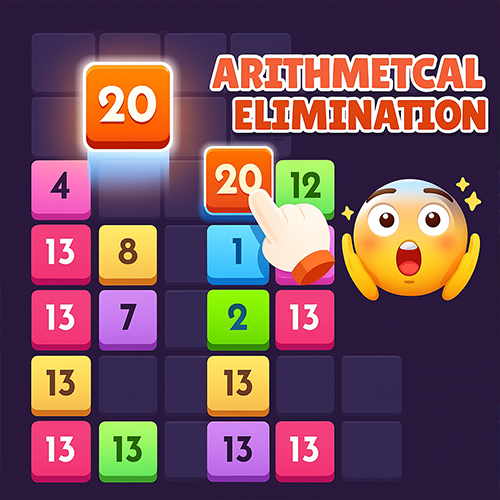
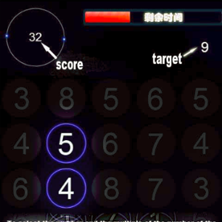
A grid of number tiles populates the board. Select tiles whose sum equals exactly 10 to clear them. Any combination works — 5+5, 7+3, 2+2+6, 1+1+1+1+1+5 — as long as the sum is precisely 10. Over 10 is invalid. Under 10 leaves the tiles selected with a "partial" marker, requiring you to find the exact remainder. The partial-selection mechanic adds commitment pressure — once you've partially selected tiles totaling 7, you're locked into finding tiles totaling exactly 3 from the remaining board.
The strategic layer emerges from board composition. Early board states are generous, with multiple easy pairs (5+5, 7+3, 8+2, 9+1) available. As tiles are cleared and the board compresses, remaining numbers skew away from easy combinations — you might have 4, 4, 7, 2, 1 remaining, where the optimal clear is 4+4+2=10 and 7+1+? (but no 2 remains). Reading future board states and choosing clears that leave favorable remainders is the optimization skill.
Power-up tiles add tactical options. The "±1" tile can be counted as one more or one less than its displayed value. The "split" tile counts as two of itself for combination purposes. The "wild" tile assumes any value from 1-9. These tiles appear on a recharge timer and hoarding them for difficult board states is often the difference between extending a run and watching the board fill.
Visual design is numerical-minimalist with clear tile readability, satisfying clear animations (tiles glow and shatter), and a running tally of your current selection sum. Numerical verdict: Close to 10 is the puzzle game for people who enjoy the arithmetic satisfaction of making numbers work. The partial-selection commitment mechanic adds genuine tension.
Tips & Strategy for Close to 10
The optimal play isn't always hitting exactly 10 — sometimes 9 or 11 sets up a better board for later moves
Number block distribution works in groups of 3 — at least one block per group can participate in a sum of 10
If remaining numbers can't form 10, don't force it — transition to the next group as quickly as possible
Subtraction cards let you work backwards — turn a 12 into a 2 so the next 8 makes exactly 10
Consecutive perfect 10s trigger Golden Round — all numbers become freely combinable
How to Get Started
- Study the puzzle rules before touching anything — a wrong move often can't be undone.
- Work from the edges inward; edge pieces constrain fewer possibilities.
- If stuck, take a 10-second break — your brain solves puzzles subconsciously.
- Write down or screenshot patterns you discover that work across similar puzzles.
- Learn from failing: each failed attempt reveals what the correct solution is NOT.